

Stunning South Dakota
Courtesy Travel South Dakota
Home to some of the nation’s most cherished monuments and breathtaking natural landmarks, South Dakota is an understated gem in the Midwest. Throw in a bit of Wild West and pioneer history, plentiful agritourism ventures, and an abundance of parks, and travel planners can build a well-rounded itinerary exploring everything that makes the Mount Rushmore state great.

From the rich farmland of the east to the Badlands and Black Hills region in the west, here are five South Dakota stops ideal for groups.
Sioux Falls
With a population of almost 225,000, Sioux Falls is one of the fastest growing cities in the U.S., and for good reason — it’s the perfect blend of cultural attractions and appealing green spaces. Its downtown Falls Park features the city’s titular falls at its center, created by the Big Sioux River cascading over picturesque pink quartzite rocks. Groups can kick off their exploration of Sioux Falls with a visit to the stunning 128-acre park, where they can walk the trails, see the falls and sculptures, take in views of the city at the Visitor Center and Observation Tower, and finish with lunch at the Falls Overlook Cafe.
Also downtown, the Old Courthouse Museum features some of the city’s most handsome architecture, constructed of native pink quartzite. Inside, the museum details the region’s history and culture. Groups can take a free self-guided tour. Also great for history buffs, Good Earth State Park at Blood Run, not far from Sioux Falls, lets visitors explore Native American culture by combining a museum with a nature preserve on lands that were once home to Oneota Tradition Peoples. It uses exhibits, artifacts and multimedia to tell the story of the significance of this land to the Indigenous people who occupied it for millennia.
Groups also have the chance to get to know the state’s agricultural history while visiting Sioux Falls. They can visit Stensland Family Farms, just outside the city, for a tour of the 200-acre dairy farm. They’ll learn about the farm’s robotic milking system, meet a calf, see the on-site creamery and even sample some of the farm’s fresh, homemade ice cream. They can also visit Wilde Prairie Winery in nearby Wilde Prairie, open beginning in May, for a wine-making tour and tasting.
De Smet
The tiny town of De Smet, north of Sioux Falls, packs a surprising punch for a destination with a population of around 1,000. It’s nicknamed the “Little Town on the Prairie,” thanks to its connection to Laura Ingalls Wilder and her iconic “Little House on the Prairie” book series. Wilder’s family settled in the area in the late 1870s, and the town was established in 1880. In addition to drawing in fans of the beloved series, DeSmet is a great attraction for those interested in westward expansion and pioneer history.
Sites like the Ingalls Homestead, a piece of the land where the Ingalls family lived from 1880 to 1887, offer a range of activities that were once performed by the pioneers themselves, from covered wagon rides to twisting hay, grinding wheat and washing clothes on a washboard. Groups can also create corn cob dolls and attend school in a one-room schoolhouse. The Laura Ingalls Wilder Memorial Society preserves artifacts related to the Ingalls family and offers tours of the Surveyor’s House, where the family lived during their first winter in De Smet. Other historic buildings and sites groups can see include the Depot Museum, the Loftus Store and Calumet Avenue. There’s also the De Smet Cemetery, where much of the Ingalls family is buried, with the exception of Laura and her husband.
De Smet is home to some popular annual events, including the Laura Ingalls Wilder Pageant. This volunteer-led, family-friendly show began in 1971 and has been held in July every year since. Groups can attend the show to see the “Little House” story play out on stage, set against the beautiful prairie backdrop. In mid-June, Old Settlers Day is a street fair that involves a parade, live music, games and rides for the community.
Badlands National Park
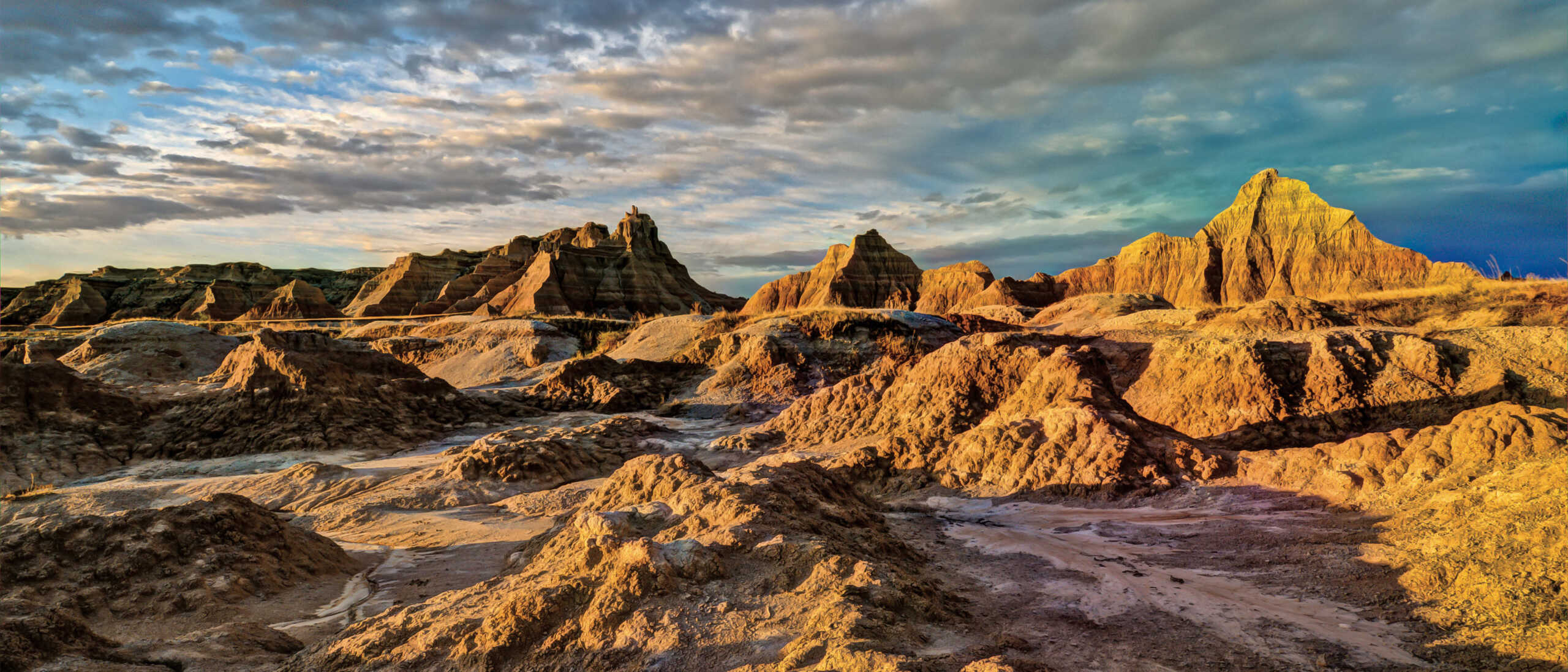
Some of South Dakota’s most stunning and otherworldly scenes can be found in Badlands National Park. The park’s 244,000 acres include impressive geological formations like buttes, ridges and canyons whose rocks and minerals paint the landscape surprising shades of red, pink, purple and yellow. It’s also a habitat for animals like buffalo and bighorn sheep. The park is one of the state’s must-sees for any visitor, but groups will also find they can experience its offerings en route to the Black Hills and other Western attractions.

The park is divided into a North Unit and a South Unit, with the South Unit being entirely located in the Oglala Lakota Pine Ridge Indian Reservation. The North Unit is the more traveled area, and groups can get a great overview of the park’s most stunning scenery with a drive along the Badlands Loop Road. The Pinnacles Overlook offers one of the best views in the park and is particularly gorgeous at sunset. Active groups will enjoy short hikes through the park’s geologic formations and grasslands, and ranger programs are a great way to get acquainted with wildlife and the study of paleontology. The park’s dark skies are also great for stargazing. To learn about the legacy of the Lakota, groups can check out the White River Visitor Center in the South Unit.

For refreshment — and to see another South Dakota icon — groups can make a stop in Wall to visit Wall Drug Store, the cafe, museum and gift shop combo that put the town on the map. The massive restaurant has plenty of room for groups and is also home to one of the largest collections of Western art in the country.
Rapid City
To the far west of the state, Rapid City is widely considered the gateway to Black Hills National Forest, the 1.2 million-acre national park and forest that sits on the border of Wyoming and South Dakota. Another moniker designates it the “City of Presidents,” not only because of its proximity to Mount Rushmore, but also due to the collection of 40-plus life-size bronze statues of U.S. presidents scattered along downtown street corners. Groups can spot these statues by taking a walking tour of downtown, or they can turn them into a scavenger hunt.
Rapid City has plenty to teach its visitors with a wealth of museums, including the Museum of Geology, which features artifacts like dinosaur skeletons, rare fossils and minerals, and the South Dakota Air & Space Museum, which features aircraft dating back to World War II. The city is also home to Reptile Gardens, the largest reptile zoo in the world, and Bear Country USA, a drive-through wildlife park where the primary residents are black bears. Groups can head into the Black Hills to find the Chapel in the Hills, a wooden stave church that’s an exact replica of the Borgund Stavkirke in Norway that dates to 1150. The Mt. Rushmore Black Hills Gold Factory also offers tours and showcases the area’s mining history.
Groups can use Rapid City as a hub for a day trip to some of the country’s most famous attractions, including Mount Rushmore. Many travelers also make stops to see the nearby Crazy Horse Memorial, which has been under construction since 1948 and is still far from being complete. Rapid City is just a half-hour drive from Custer State Park, the outdoor adventure hub that hosts the Buffalo Roundup and Arts Festival. The annual event draws thousands of visitors to watch cowboys and cowgirls round up and drive a herd of around 1,300 buffalo.
Deadwood
Northwest of Rapid City and deep in the Black Hills, Deadwood is a city built on gold rush mythology and Wild West history. But perhaps Deadwood didn’t leave its wild legacy in the past; the former mining town has several casinos where groups can stay and play for a fun bookend to their trip. Historic Deadwood has been a National Historic Landmark since 1961, but that doesn’t mean it’s stuffy. The town combines vibrant nightlife, from concerts to rodeos, with its iconic architecture and historic attractions.
To hear the story of Deadwood, groups can stop at museums like the Adams Museum, a house museum once owned by one of Deadwood’s founders; the Days of ’76 Museum, which honors the settlers who founded the town and displays artifacts like horse-drawn wagons, stage coaches and memorabilia; and Broken Boot Gold Mine, a defunct mine where visitors can take tours and even pan for gold. They can also see Mount Moriah Cemetery, home to Wild West legends like Wild Bill Hickok and Calamity Jane. The story of Deadwood wouldn’t be complete without delving into one of the more scandalous aspects of its past — which visitors can do at The Brothel Deadwood, a preserved brothel that now operates as a museum. To learn more about the Indigenous presence in Deadwood, they can visit Tatanka Story of the Bison, the third largest bronze sculpture in the world.


Rachel Crick
Rachel Crick is the associate editor and project manager for The Group Travel Leader Inc. When she's not writing articles amidst her many plants, Rachel enjoys gardening, photography, and spending time with her family and cats, Misty and Jazz.
You May Also Like



About Us

We're Select Traveler, Select Traveler, America's leading experts on affinity travel for banks, chambers of commerce, university clubs and other loyalty organizations. Find hundreds of articles and other free resources here.
The Latest Issue
Stay Connected!
Get the Select Traveler Minute e-newsletter delivered every month.