

Uganda: Regally Exotic
Courtesy Uganda Tourism Board
Straddling the equator in East Africa, Uganda is home to powerful waterfalls, wildlife-rich reserves and rainforests where mountain gorillas roam. Yet there is just as much to discover beyond its national parks, from lively neighborhoods to centuries-old cultural traditions.

Most travelers arrive in Kampala, the center of Uganda’s cultural life and home to bustling street markets and the royal heritage of the Buganda kingdom. Farther afield, groups can take to the water for a different view of the wildlife, follow winding roads past tea plantations or explore landscapes framed by distant mountains.
In this African country, groups can watch the Nile thunder over a waterfall, meet local artisans and trek through the forest in search of exotic wildlife, all on the same trip.
Can’t Miss Destinations
Kampala
Spread across a series of hills, Kampala, Uganda’s capital and largest city, combines the energy of a modern African metropolis with the traditions of the Buganda kingdom. Groups can browse the colorful stalls at Nakasero Market, explore the country’s history at the Uganda Museum, and sample local dishes at busy cafes and street-food stalls. A visit to the UNESCO-listed Kasubi Tombs, where four Buganda kings are buried, offers a fascinating introduction to the kingdom’s royal heritage and spiritual traditions. Travelers can also explore Kampala’s craft markets for handmade jewelry, textiles, and souvenirs or spend an evening discovering the city’s music and entertainment scene.

Murchison Falls National Park
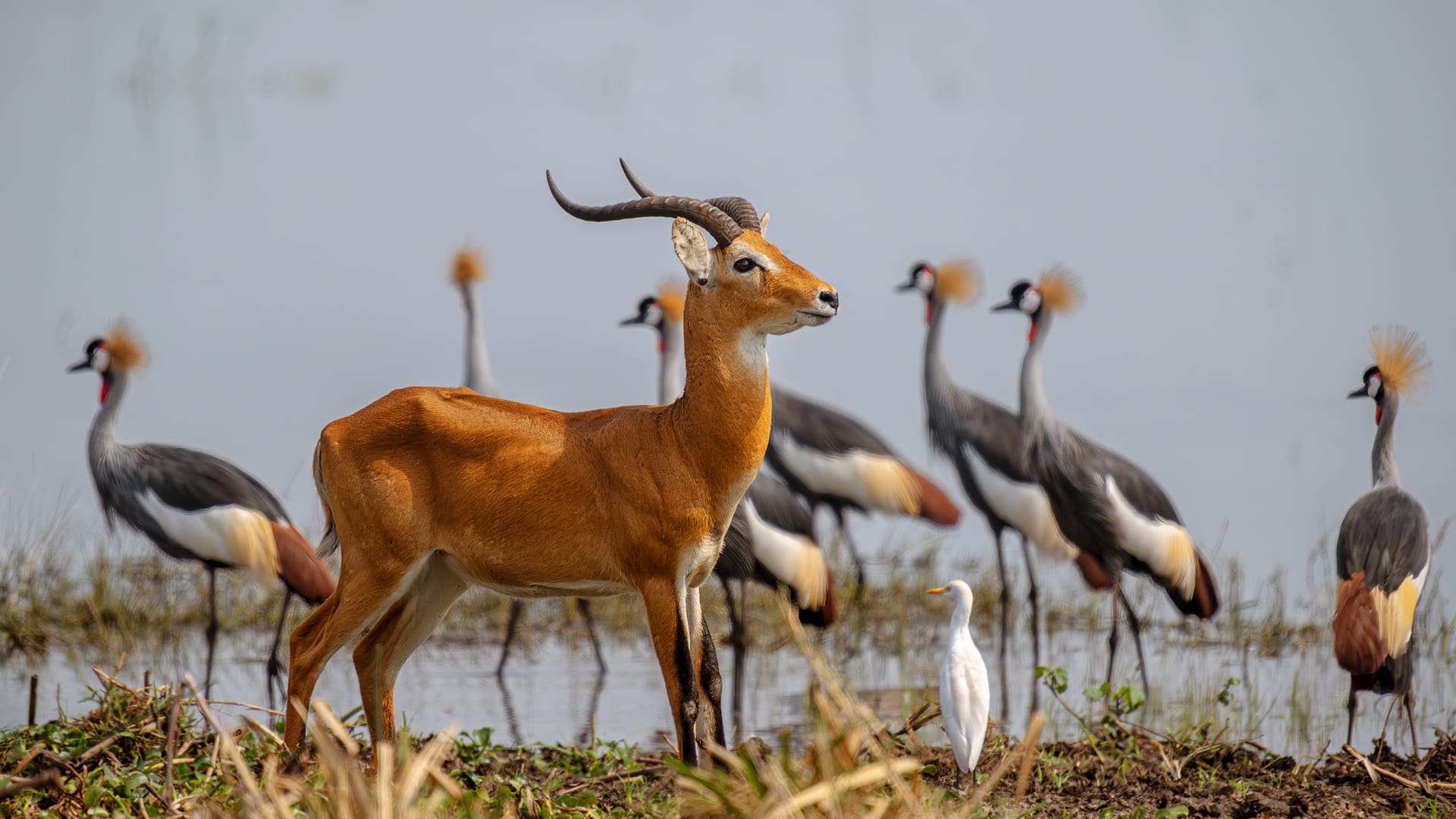
Located in northwestern Uganda, Murchison Falls National Park offers one of the country’s most dramatic natural spectacles, where the Nile squeezes through a narrow rocky gorge before plunging into a churning pool. Groups can hike to viewpoints overlooking the falls or take boat cruises upriver from Paraa to see the rushing water from the river below. Along the way, visitors might spot hippos, crocodiles and elephants gathering near the riverbanks. Game drives across the park’s open savanna offer opportunities to see giraffes, buffalo and Ugandan kob, while birdwatching excursions into the Nile Delta may reward travelers with a sighting of the elusive shoebill bird.
Queen Elizabeth National Park
Stretching across the western Rift Valley, Queen Elizabeth National Park offers a safari experience that combines wildlife viewing with striking volcanic landscapes. Groups can cruise along the Kazinga Channel, which connects Lake Edward and Lake George, to watch hippos, crocodiles and elephants along the water’s edge. Game drives through the park’s grasslands bring opportunities to spot buffalo, antelope and lions, while a visit to the southern Ishasha sector offers the chance to see the park’s famous tree-climbing lions resting in fig trees. Travelers can also explore the region’s volcanic crater lakes and enjoy sweeping views of the surrounding countryside before continuing toward Bwindi.

Signature Experience
Gorilla trekking in Bwindi Impenetrable National Park is one of Uganda’s defining experiences. Alongside experienced guides, groups hike through dense rainforest and along steep forest trails in search of a habituated mountain gorilla family. Once the gorillas are located, visitors can spend an unforgettable hour observing the apes as they feed, rest and interact in their natural habitat.
Unforgettable Flavor
A Ugandan rolex has nothing to do with a watch. The name is a playful take on “rolled eggs,” describing a warm chapati wrapped around an omelet filled with onions, tomatoes and cabbage. Groups can watch vendors prepare this popular street food at roadside stalls before digging into one of Ugandans’ favorite quick meals.
Hidden Treasure
Far from Uganda’s busier safari routes, Kidepo Valley National Park stretches across remote savannas near the country’s borders with South Sudan and Kenya. Guided game drives take groups through wide, mountain-ringed plains in search of buffalo, giraffes, elephants and lions. The park is also home to cheetahs and greater kudu, a species rarely seen in Uganda’s more heavily traveled western parks.
Favorite Souvenir
Baganda artisans make barkcloth by beating the inner bark of the mutuba tree into a soft, terracotta-colored fabric using a technique that predates weaving. UNESCO recognizes barkcloth as intangible cultural heritage, and it is now used to make wallets, journals, bags and artwork. Groups can find a handmade piece to bring home at local craft markets.


Diana Bocco
Diana Bocco is a Prague-based freelance writer whose work covers travel, health, pets, and lifestyle topics for publications including National Geographic, USA Today, Inc., and Business Insider. When she’s not writing about destinations, meetings, and memorable travel experiences, she’s usually planning her next trip, studying languages, or spending time with her rescue dog, Charlie.
You May Also Like



About Us

We're Select Traveler, Select Traveler, America's leading experts on affinity travel for banks, chambers of commerce, university clubs and other loyalty organizations. Find hundreds of articles and other free resources here.
The Latest Issue
Stay Connected!
Get the Select Traveler Minute e-newsletter delivered every month.